
Nobel Prize in Chemistry Is Awarded to Henri Kagan and Kenso Soai
The New York Times, USA Today and 10 more
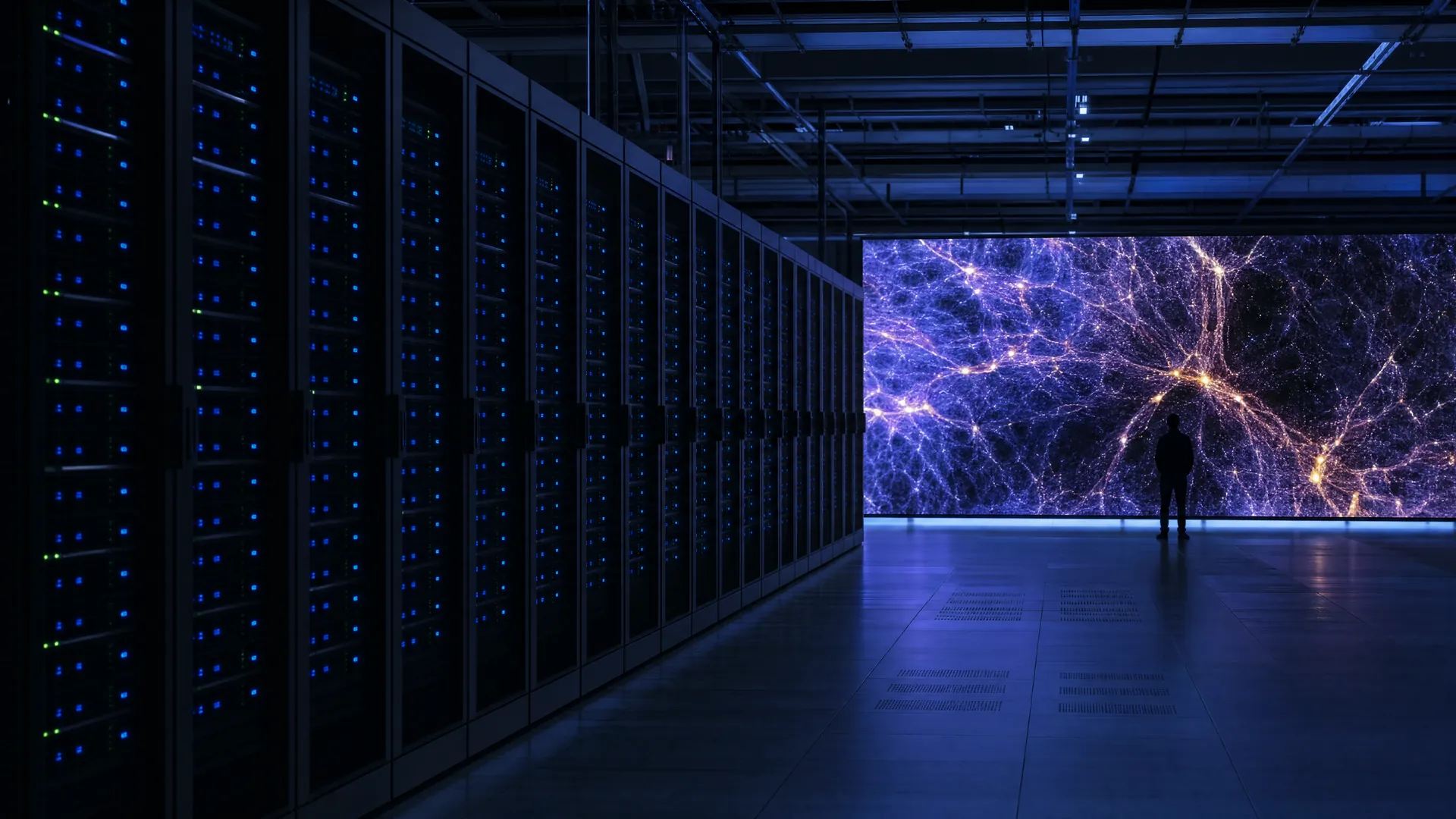
Researchers led by Oliver Zier of the Center for Astrophysics | Harvard & Smithsonian have built Lumina, described as the most detailed simulation yet of the universe's first 2 billion years. Run on more than 15,000 GPUs on the Frontier supercomputer, it models dark matter, gas and radiation so astronomers can test their theories against James Webb Space Telescope observations.
Astronomers now have a new way to check whether their ideas about the early universe hold up. A team at the Center for Astrophysics | Harvard & Smithsonian has created Lumina, a computer simulation of how ordinary matter, dark matter and radiation interacted during the cosmos's first 2 billion years. The work is published in the Monthly Notices of the Royal Astronomical Society. Lumina covers more than 100 times the volume of earlier comparable simulations, a cube most outlets put at about 1.5 billion light-years on a side. HotHardware and Scienmag say about 1.6 billion. The goal, lead author Oliver Zier said, is to turn theory into "detailed predictions" that can be compared with what the James Webb and Nancy Roman telescopes see. [1] [2] [3] [4] [5] [6] [7] [8]
The simulation follows reionization. That was the period when radiation stripped electrons from atoms in the gas between galaxies, which let light travel freely through space. The team says Lumina is the first simulation to capture both hydrogen and helium reionization together in one self-consistent model. Its results suggest early stars and galaxies drove hydrogen reionization. They also point to growing supermassive black holes as the main force behind helium reionization. Knowridge notes these are model predictions, not direct observations. CNET reports the simulation also predicts "fewer massive galaxies" in the early universe than Webb observations suggest. [3] [5] [6] [7] [8]
Building Lumina took about 15,000 graphics processors on Frontier, one of the world's fastest supercomputers, at Oak Ridge National Laboratory in Tennessee. HotHardware and Scienmag say the run also used the equivalent of more than 100,000 CPU cores. According to Scienmag, the model builds on an earlier simulation called IllustrisTNG. That outlet says the team includes researchers from MIT, Harvard, the University of Texas at Dallas, York University and Germany's Max Planck Institute for Astrophysics. Co-author Aaron Smith said the team feels "incredibly fortunate" to be doing this work. Future studies will look at how gas moved between galaxies. HotHardware says Lumina is already open to other scientists, while Knowridge says researchers intend to share it. [2] [3] [5] [6] [7] [8]
Summary written by Vox Populi News from the 8 sources below. See all sources
Lumina is a supercomputer simulation of the universe's first 2 billion years after the Big Bang. It tracks dark matter, gas, stars and radiation across a region roughly 1.5 to 1.6 billion light-years wide. [3] [5] [7] [8]
Astronomers plan to compare its predictions with observations from the James Webb Space Telescope, the Nancy Roman Space Telescope and other telescopes. That comparison will show whether their understanding of the universe's physical laws holds up or needs rethinking. [1] [4] [5]
The structure of dark matter and intergalactic gas as it would have appeared about 1.5 billion years after the Big Bang.

It's a cosmic baby photo. Astronomers have managed to construct the most detailed simulation yet of our universe in its infancy.

The Lumina Project spans 2 billion years and will allow scientists to test theories and predictions about the origins of the cosmos.

The most detailed simulation of our universe's first 2 billion years to date. Millions of miles away from Earth, the James Webb Space Telescope (JWST) and Nancy Roman Space Telescope are revealing…
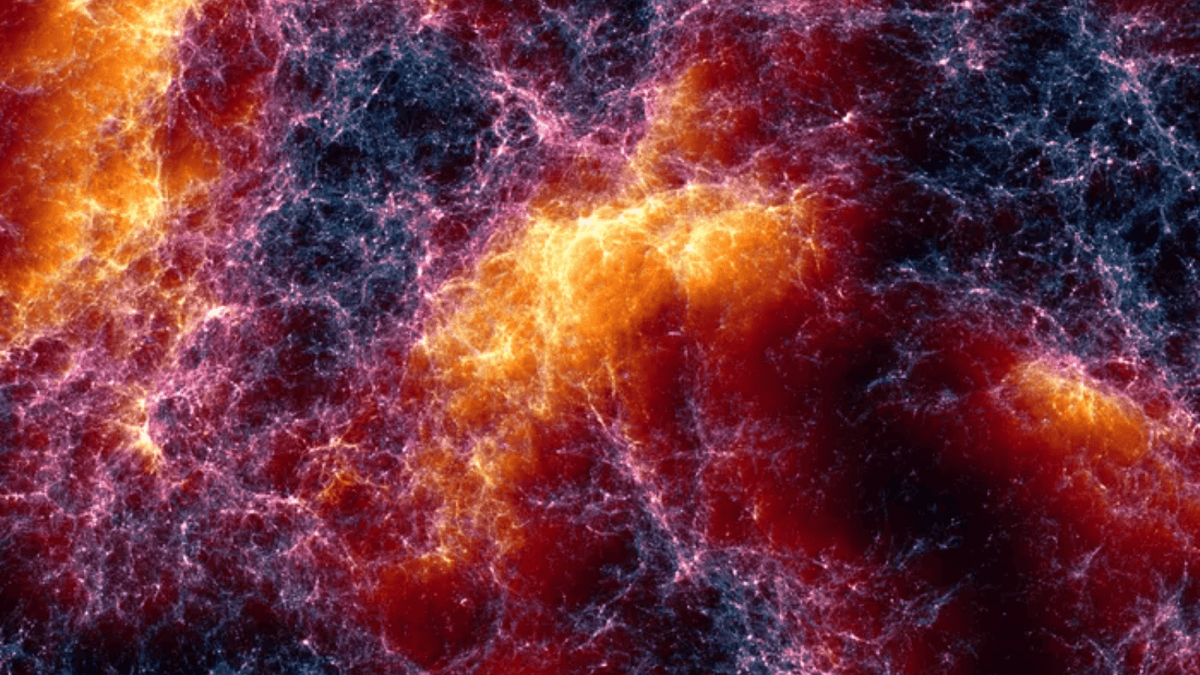
New model gives astronomers a powerful tool to understand discoveries from the James Webb and Nancy Roman space telescopes The James Webb Space Telescope (JWST) and Nancy Roman Space Telescope are…
Scientists have unveiled a supercomputer simulation named Lumina, which is the most detailed window yet into the first two billion years of our universe.
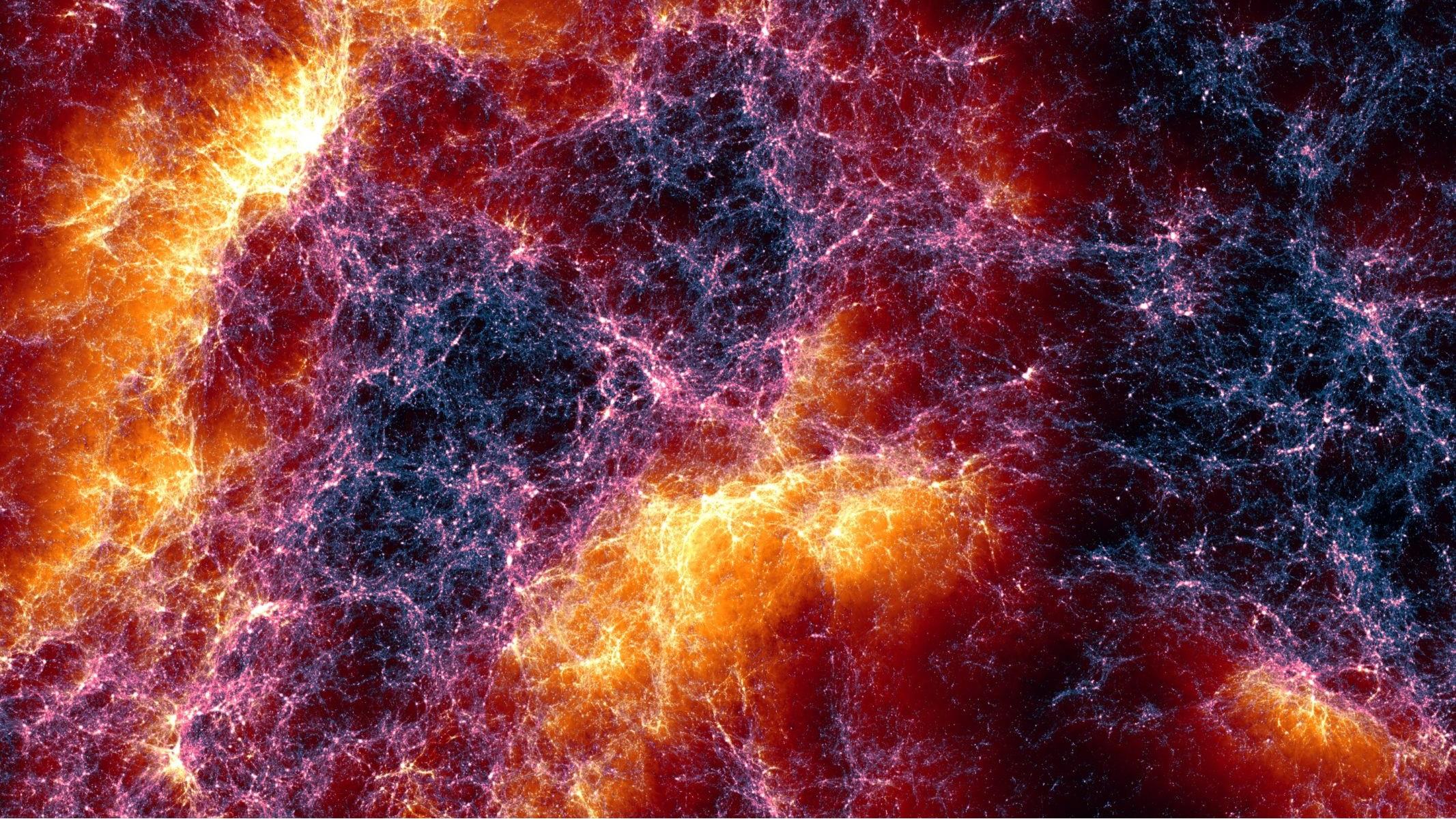
A vast new computer simulation is giving astronomers a detailed look at how the first stars and galaxies transformed the early universe.

In the beginning, there was no light to speak of. After the Big Bang, the universe existed as a hot, dense soup of electrons and subatomic particles, an ionized plasma that initially occupied a…
The New York Times, USA Today and 10 more
The New York Times, The Wall Street Journal and 10 more

Aol, New York Post and 10 more

The New York Times, Axios and 10 more